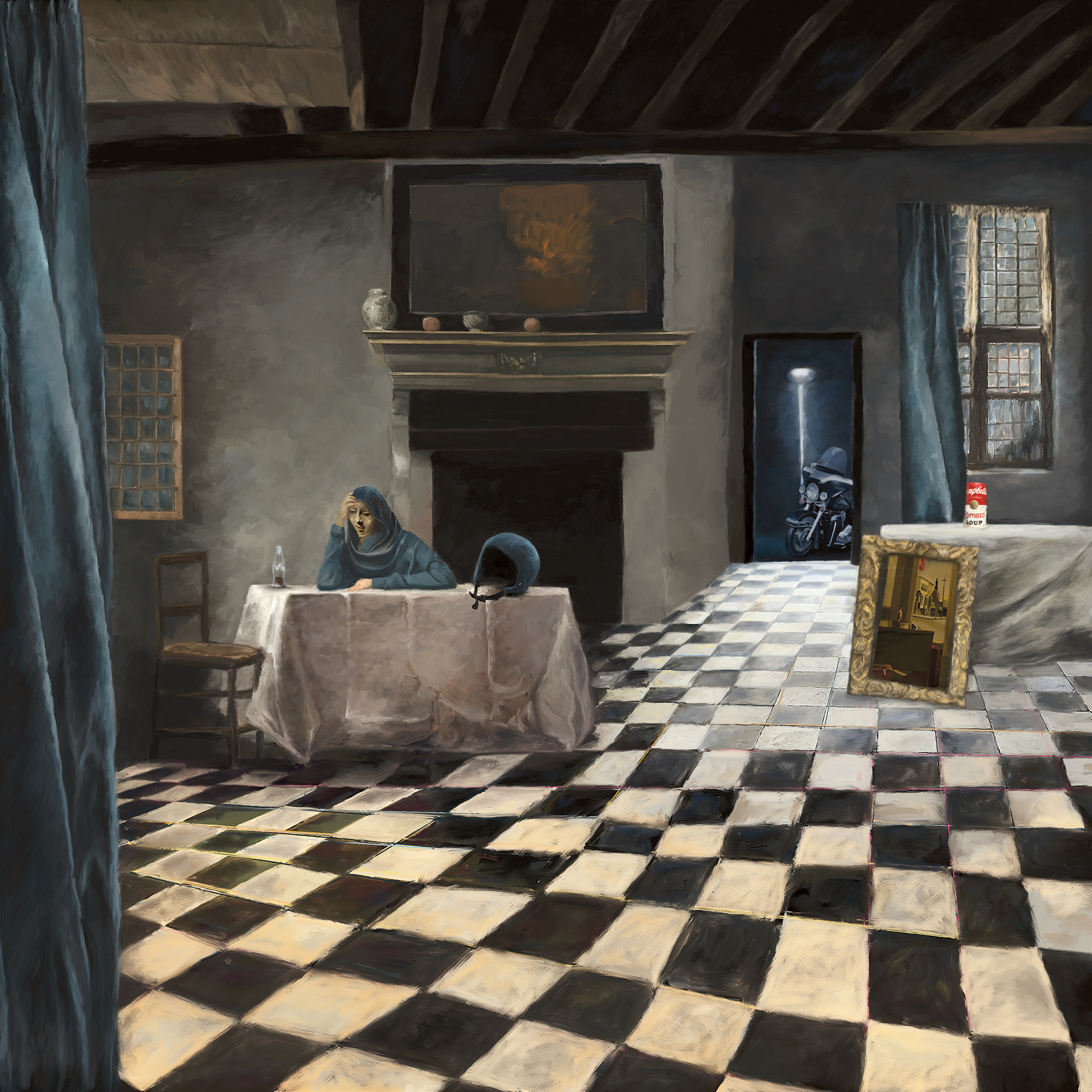
Unknown Legend # 2
A Case Study / 4 / Unknown Legend
I'm a painter, or an artist: whatever you prefer to call it – what is it? Simply saying someone applying paint to a canvas feels like too easy an explanation. A better question might be why someone chooses to become an artist. Here’s my attempt to answer that.
If you were fortunate enough to play with crayons or a paint box as a child, you’ve already caught a glimpse of the world of painting and the joy it can bring. You may even have realized what a wonderful tool for expressing your feelings and thoughts you held in your hands, and that painting, or working on art in general, is a way of reacting to what happens in your world. It may even have made you dream of a satisfactory life as an artist – but: leaving childhood behind, many people, understandably, trade the unpredictable terrain of creativity for something more certain—something that pays the bills.
I never wanted to take that route. Instead, I embraced the uncertainty of making art and enrolled in a renowned art school. It was there that I began to understand that creativity can be both exhilarating and unforgiving. Inspiration doesn’t guarantee stability, and paintings—no matter how heartfelt—don’t pay for rent or groceries.
Eventually, practicality led me to explore other ways to channel my creativity. I considered architecture and teaching before finding my way into graphic design and advertising. Those fields provided structure and some level of satisfaction—the pleasure of solving visual problems and giving ideas form and purpose. Yet, painting remained vital in the background, like a familiar melody I could never quite forget.
Speaking of melodies: during my teenage years, I discovered the music of Bob Dylan, Leonard Cohen, Neil Young, and Joni Mitchell, among others. These artists not only provided captivating sounds but also shared lyrics that told powerful stories and formed an inspiring collection of impressions - something like the soundtrack of my life, a pool of inspirations for the creative work I'm doing these days.
More such "soundtracks" were formed while reading books, visiting exhibitions, collecting informations, thoughts, impressions, memories and visions - all somehow connected with art.
They became important a few years ago, when I retired from my career in the advertising industry. I was reminded that painting (or art in general) is a way to react, describe, compare and investigate anything life offers to you. Lost and buried ideas resurfaced, and my creativity accepted the challenge, only to face the first catch.
At that time, I lacked a dedicated room for my painting equipment, so I utilized the tools from my graphic design era: computer, monitor, graphic tablet, and image editing software became my paint, brush and easel.
Having those electronic devices at hand opened up a wide range of new possibilities. Connected to the World Wide Web, I could explore art history, listen to my favorite songs, and effortlessly gather all the bits of information I considered useful. The magic of digitally manipulating images—or even creating entirely new ones—greatly enriched and inspired my work.
I built myself a momentum: out of a pool of ideas, I could pick one that inspired me, and start creating with motivation.
So, I'm now a digital artist.
I quickly realized that the classic feeling of painting remained vital, even when using digital tools. Before long, I discovered that these tools didn’t restrict me to a single version of my work — quite the opposite. Being able to create and develop multiple copies allowed me to explore variations, which over time evolved into a kind of case study in artistic experimentation.
To demonstrate what digital painting looks like, and how studies can build up into a cohesive case study, Unknown Legend appears to be suitable:
This study starts with # 2, based on Neil Youngs' "Unknown Legend" from 1992, and it sure is a perfect starter.I’ve long appreciated the song,but it wasn’t until I began examining it as a painter that I noticed how the lyrics started chaines of associations leading to many vivid images in my mind.
And so it went on:
There is no particular reason why this song, of all songs, should have inspired this case study—it merely happened to be stuck in my head. Yet that was reason enough to listen closely, and connect to my collection of soundtracks.
I’ve always liked the metaphor of mixing the tracks—blending ideas, disciplines, or even writing styles the way a music producer layers sounds. In music, each track adds its own texture or rhythm; in thought, each concept can contribute a new dimension. I suspected that combining these conceptual “tracks” might yield unexpected harmonies.
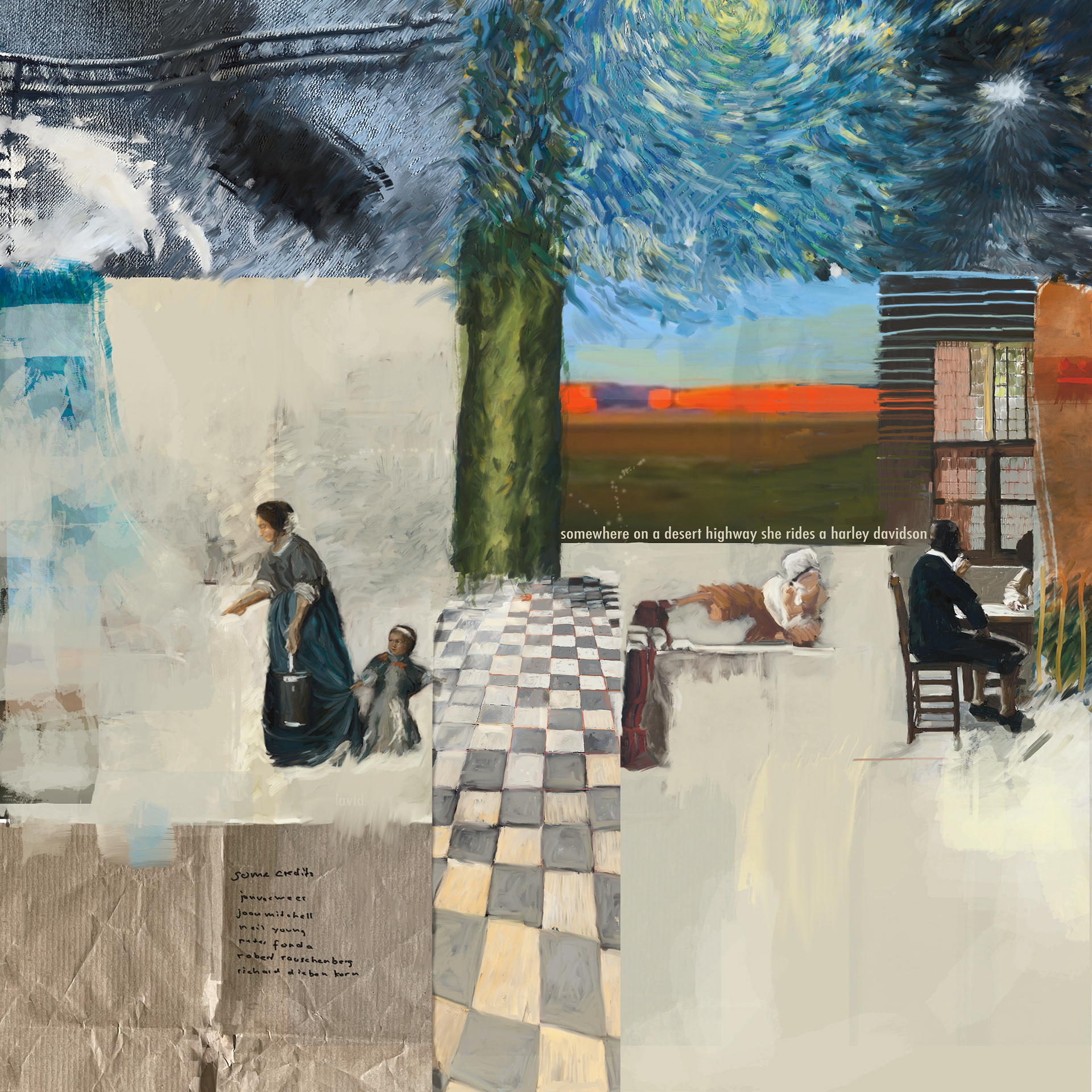
Indeed, before long, selected lyrics began to summon images; these, in turn, set off further associations. A mention of a diner, for instance, conjured the gleam of a checkerboard floor, which soon transformed into the interior of a seventeenth-century Dutch painting. Through its window one could see a Harley—an incongruous detail that seemed to belong to the song’s anonymous heroine, a woman who would gladly trade her dreary present for an imagined freedom: the unknown legend.
Incorporating additional details—a Coke bottle, a Campbell’s can—and using digital tools such as copy-and-paste fragments from old paintings or simulations of brushstrokes helped me form an initial visual impression of the scene that had taken shape in my mind.
This work is not a painting in the traditional sense but a digital composition: an accretion of impressions and visions that unfolded while I listened to the song. It is intentionally provisional — the first in a series born from my research into the idea of “Unknown Legend.” The following three images each document a stage in an evolving dialogue, a response to questions that change as the work changes. More stages will follow; the series is a process of discovery rather than a single resolution.
Painting is a form of inquiry — a way of exploring and responding to my surroundings. Yet, first and foremost, it is a continuous conversation with the work as it unfolds.
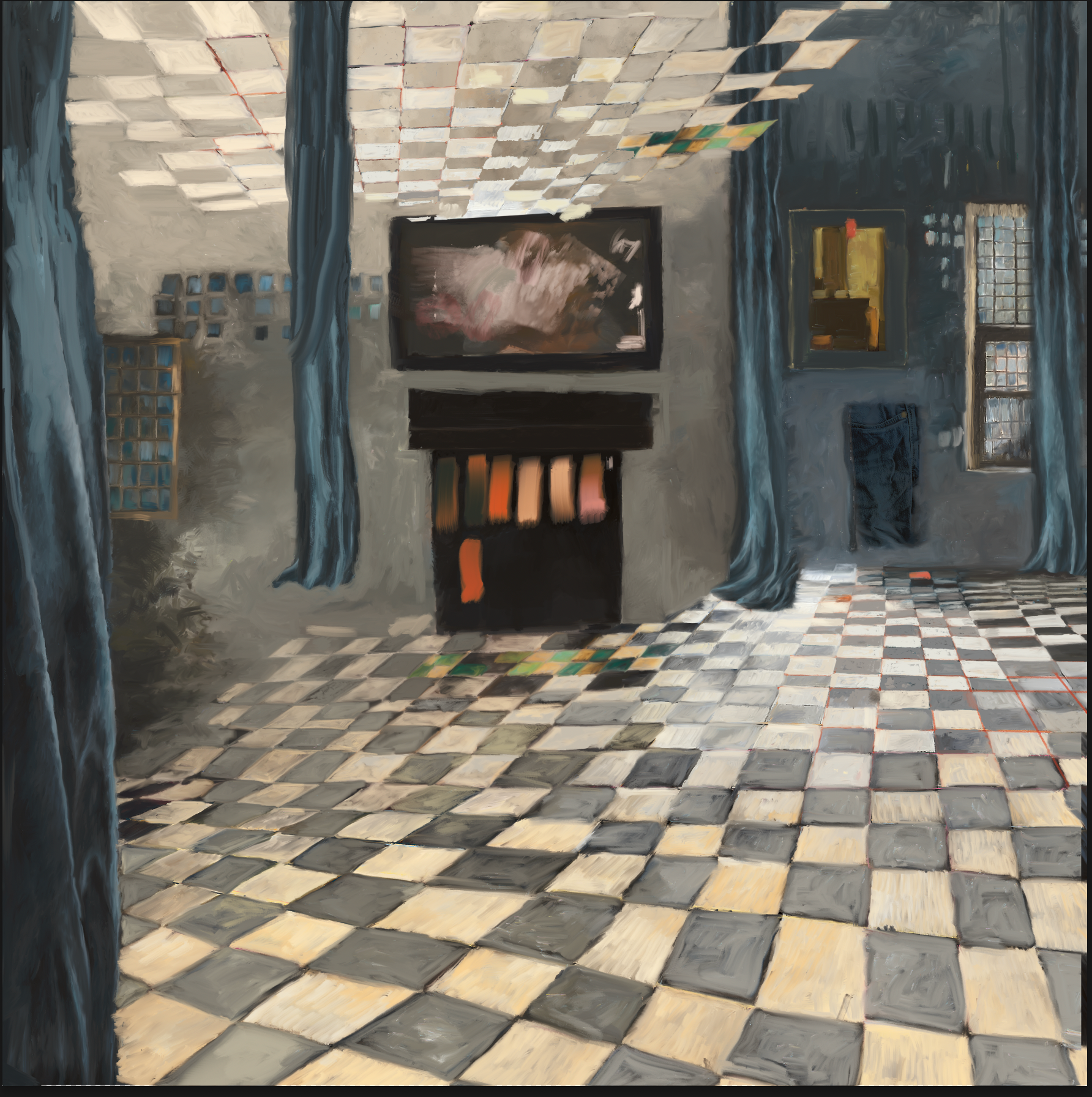
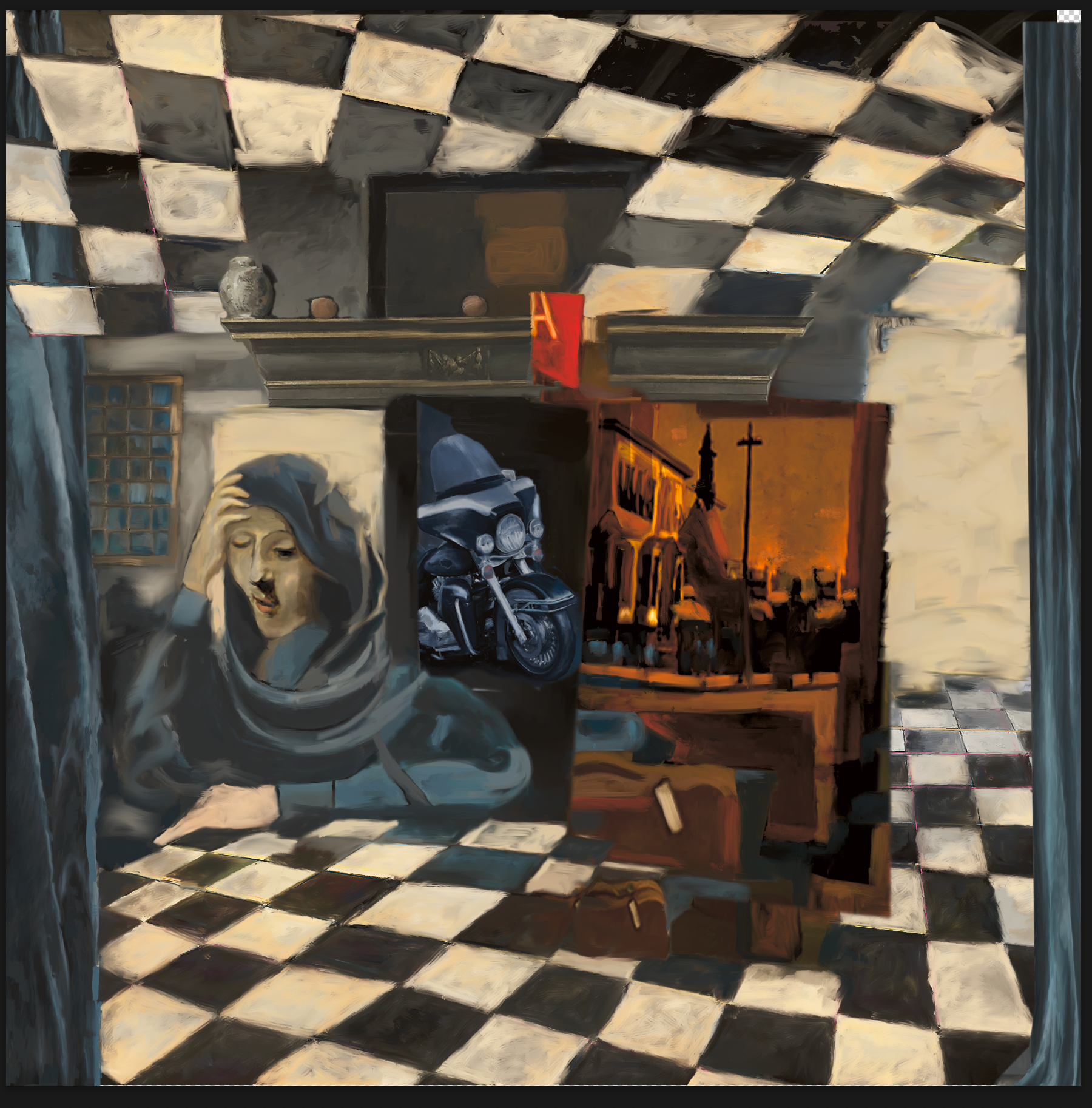
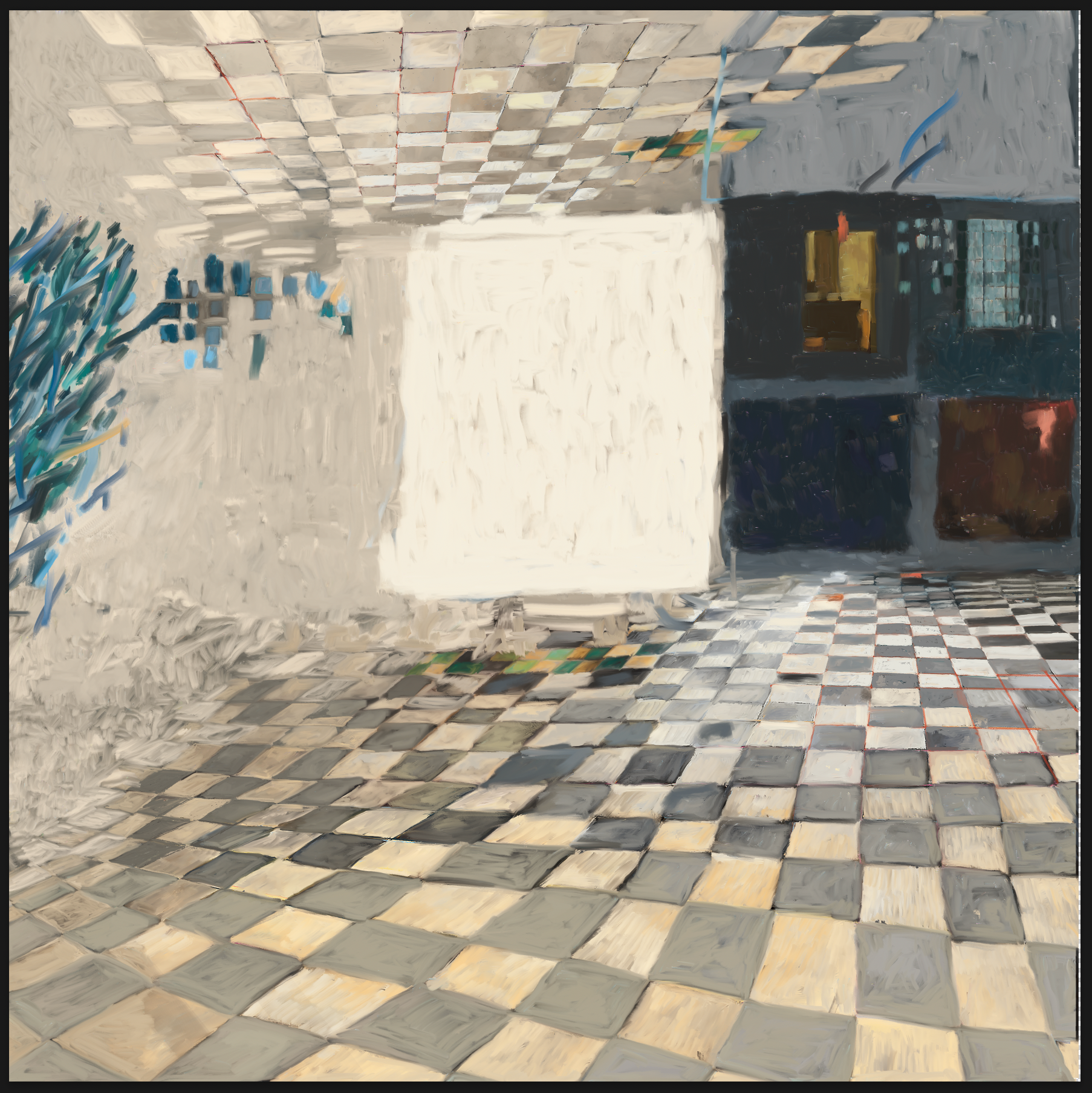
unknown legend # 3a, 3b, 3c - work in progress
Considering the influence of materials and tools on the creation of a work of art is not only an important theme—it’s a powerful lens for inquiry because it touches every stage of artistic thinking, making, and interpretation. Does a pencil or a brush have a decisive effect on the visual appearance, or is the underlying thought process independent of the choice of medium? If thought is to remain independent, shouldn't it then detach itself from technical considerations? But wouldn't we then no longer be moving within the optical realm, but rather entering abstract landscapes? On the other hand, isn't a simple brushstroke also an abstract expression? I think there's a need to abstract thoughts and thereby give them universal validity, but at the same time, they should also remain visible. Is there something tangible in an abstract work, or does an object have an abstract core? One can try to find out, and for the duration of the search, move within a space of freedom. Freedom is something with positive value, and this is where digital tools come into play. They can, for example, take on the role of a brush and are simultaneously freed from the limitations of the tool. Creating a collage from various photos and making it look like a painting – no problem. Pursuing one thought and complementing it with another – a search engine query provides inspiration. Simply enjoying this newfound freedom without losing a critical eye seems like a viable solution for the moment.
There appears to be a line that has animated modern and contemporary art since at least Cézanne and the Cubists, who began to see the act of perception itself as a subject for painting — to the digital age, where the “tool” (whether brush, algorithm, or AI model) is both medium and mediator.
The digital age – Frightening or inspiring? To explore this tension, I initiated a small inquiry using artificial intelligence. Specifically, I provided the preceding statement to an AI system and requested that it be reformulated in a more formal, academic register.
AI delivered a Manifesto for the Space of Freedom – not exactly what I expected, but then: what had I been thinking of? nothing like proclamations or lofty rhetoric, that's for sure, but some keywords and passages still contained sparks that resonated. Read for yourself:
The material speaks.
Every tool leaves its mark — the pencil hesitates, the brush breathes, the algorithm computes. The appearance of a work is never innocent of its medium. Form is thought in motion.
Every tool leaves its mark — the pencil hesitates, the brush breathes, the algorithm computes. The appearance of a work is never innocent of its medium. Form is thought in motion.
The thought transcends the tool.
Yet the idea is not imprisoned by the instrument. The mind sketches before the hand obeys. To think freely is to imagine the brush before it touches the canvas — or the cursor before it glows.
Yet the idea is not imprisoned by the instrument. The mind sketches before the hand obeys. To think freely is to imagine the brush before it touches the canvas — or the cursor before it glows.
Abstraction is visibility.
To abstract is not to erase, but to reveal the invisible structure of seeing. A single brushstroke is already an abstraction; every image, a negotiation between matter and idea.
To abstract is not to erase, but to reveal the invisible structure of seeing. A single brushstroke is already an abstraction; every image, a negotiation between matter and idea.
Objects have abstract cores.
Every thing conceals a geometry, a rhythm, an essence that exceeds its surface. The task of art is to draw this out — to translate the tangible into thought and the thought back into form.
Every thing conceals a geometry, a rhythm, an essence that exceeds its surface. The task of art is to draw this out — to translate the tangible into thought and the thought back into form.
Freedom resides in the process.
Creation is not the end but the search itself. The artist moves through a space of freedom — where decisions are both deliberate and uncertain, where discovery is the only constant.
Creation is not the end but the search itself. The artist moves through a space of freedom — where decisions are both deliberate and uncertain, where discovery is the only constant.
Digital tools expand the field.
Freed from the resistance of paint or graphite, the digital brush opens new dimensions. It is both imitation and invention — capable of collage, transformation, recombination. The screen is the new canvas, the search engine the new sketchbook.
Freed from the resistance of paint or graphite, the digital brush opens new dimensions. It is both imitation and invention — capable of collage, transformation, recombination. The screen is the new canvas, the search engine the new sketchbook.
Critical joy.
Freedom is valuable only when accompanied by awareness. To enjoy digital freedom is not to surrender to ease, but to remain alert — questioning, comparing, researching, reacting.
Freedom is valuable only when accompanied by awareness. To enjoy digital freedom is not to surrender to ease, but to remain alert — questioning, comparing, researching, reacting.
Art as research.
Painting, coding, collecting, editing — all are acts of inquiry. To create is to investigate; to investigate is to stay alive in thought.
Painting, coding, collecting, editing — all are acts of inquiry. To create is to investigate; to investigate is to stay alive in thought.
I have to admit that this product of an artificial intelligence is fascinating; still I'm not ready to include it into my work as a substitute of my own brainwork. My own thinking is still the engine, and I will use AI just as an optional scaffolding around it.
Anyway, the final section captures my perspective well. Moreover, the findings suggest an opportunity to expand the scope of my work. It feels like an invitation to keep moving forward—there’s more research to pursue.
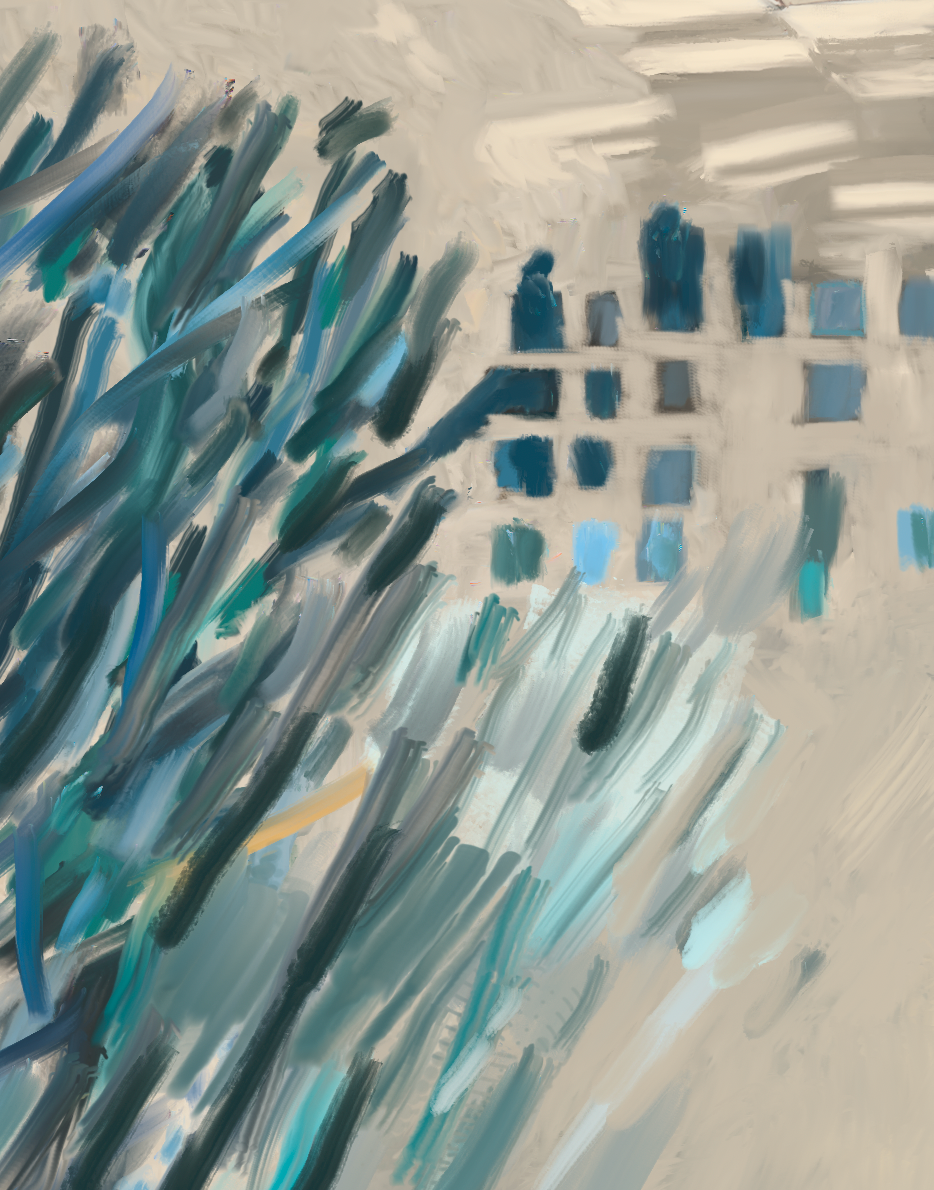
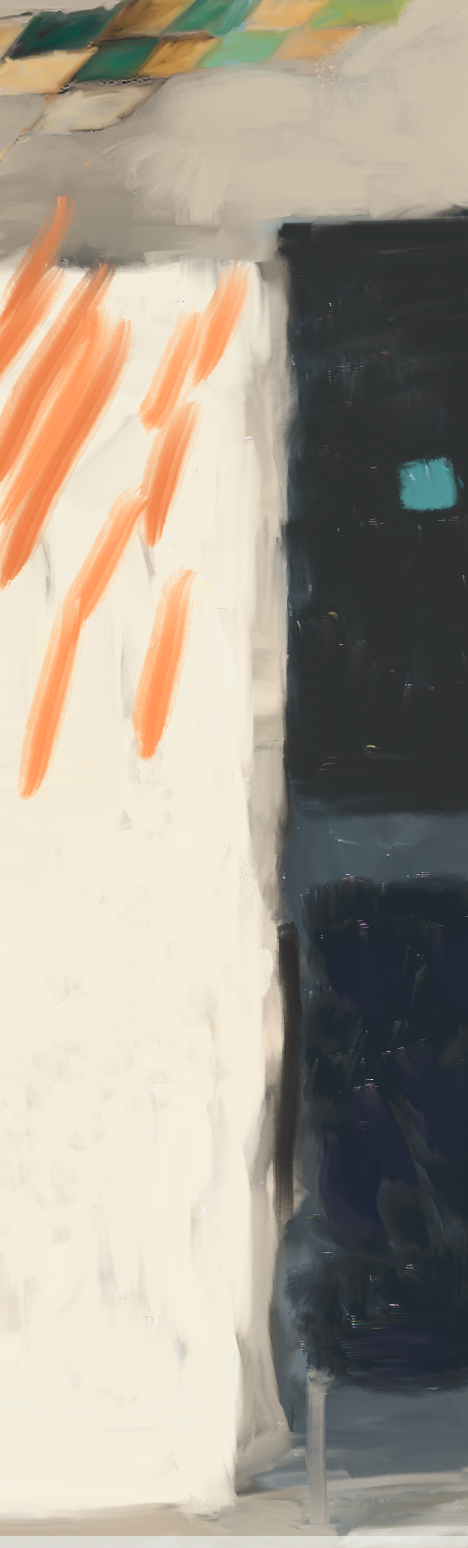
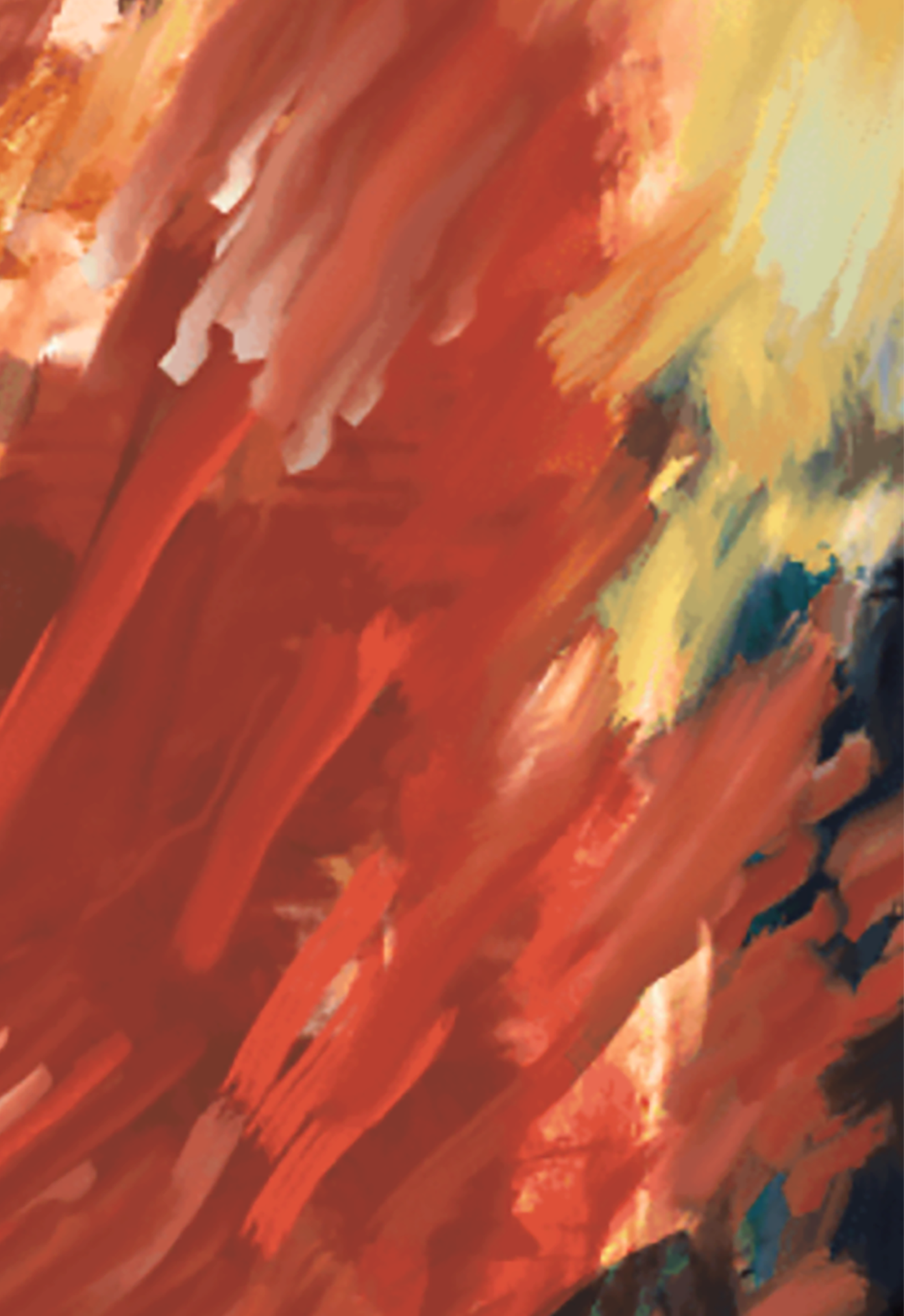

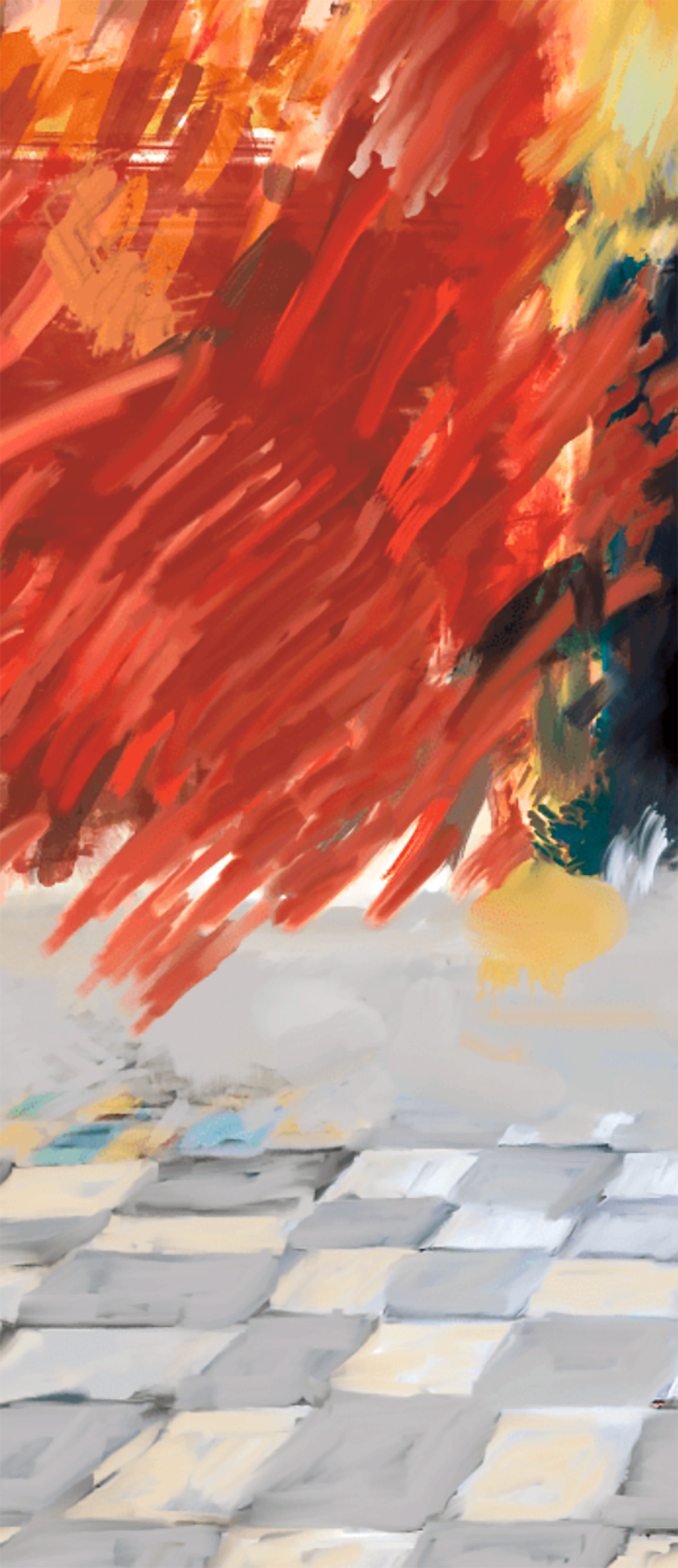
unknown legend - details
No, these are not excerpts from real paintings; they are screenshots of digital brushstrokes. The average eye is not yet familiar with such convincing imitations of the texture, strokes, and layering of traditional brush and painting techniques. But perhaps these enlargements can help to familiarize people with them and, above all, to acknowledge the value of digital painting.
Go on with the research.
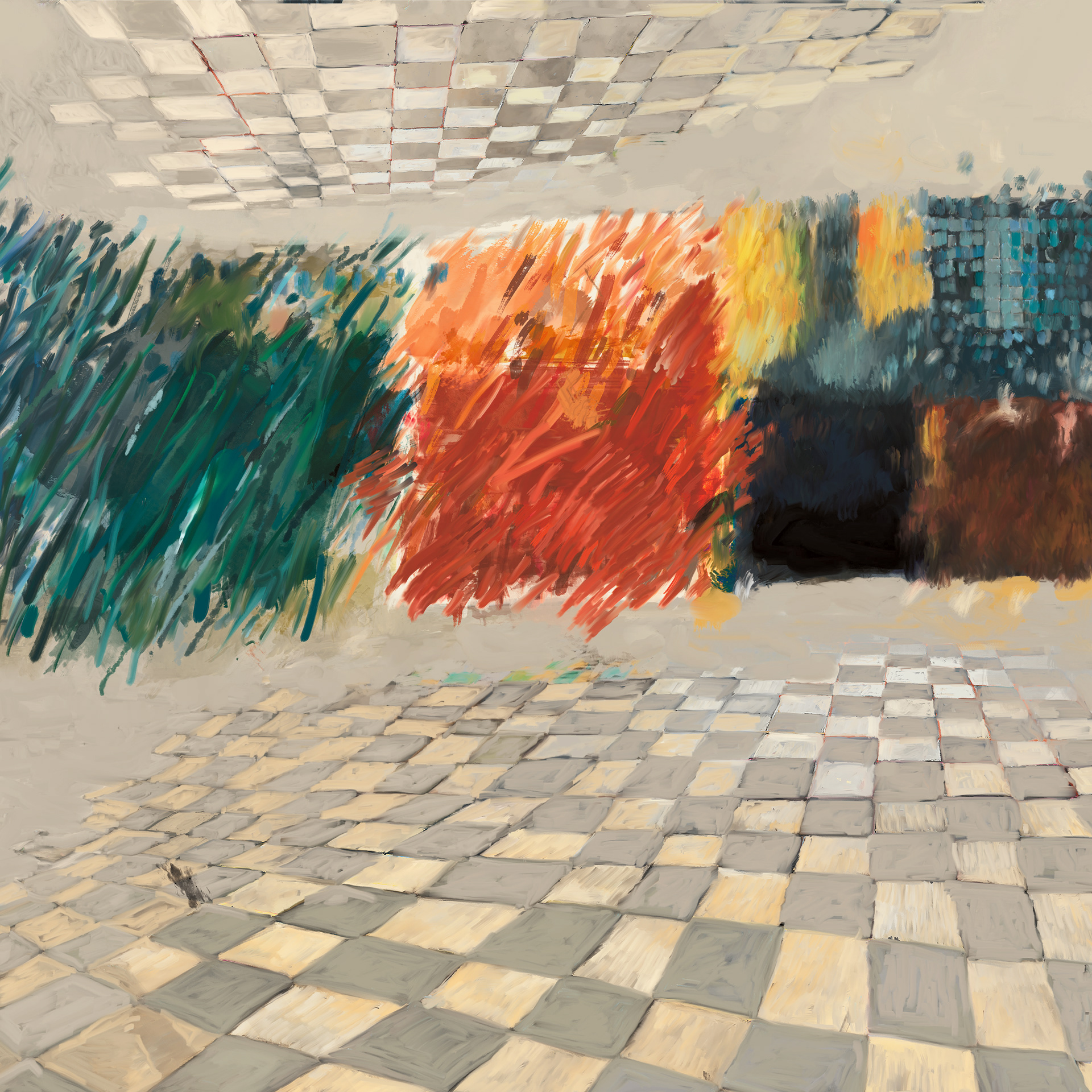
unknown legend # 3
As the study has progressed, it has drawn fresh inspiration from the soundtracks already cited—especially those engaging with painting and, above all, with Expressionism and the art of Joan Mitchell.
I've always found it fascinating to examine the work of other artists, but other aspects of life also deserve attention in the form of comparisons and explorations; as essential driving forces of art, they influence my work. I've already mentioned several musicians as sources of inspiration; but this list also includes (in no particular order, and certainly not incomplete) painters such as Jan Vermeer, Robert Rauschenberg, Antoni Tàpies, Willem de Kooning, Gerhard Richter, Edward Hopper... Not forgetting the books I've read, with Jack Kerouac's "On the Road" as an outstanding example.
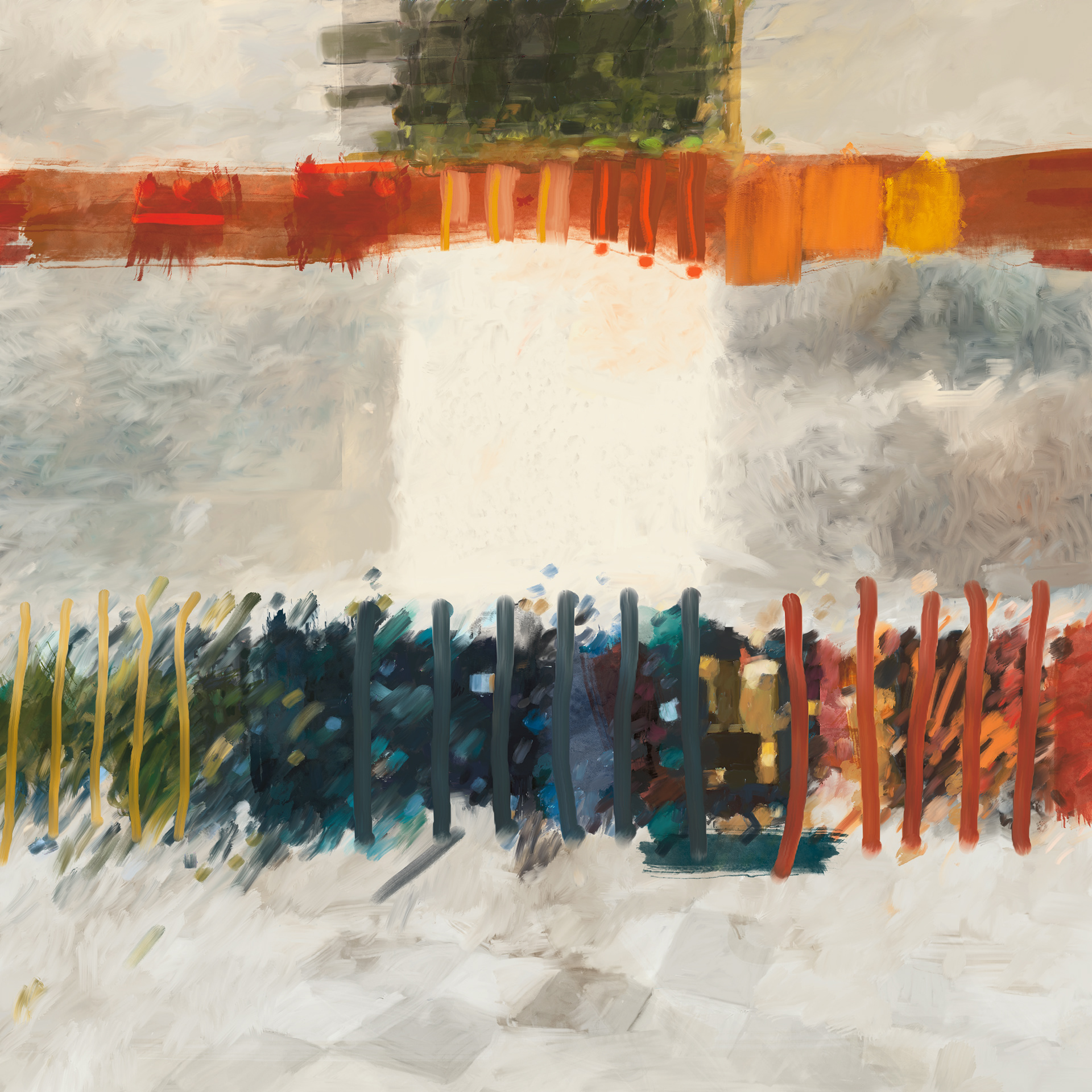
unknown legend # 4
This image incorporates numerous references to text fragments and snatches of images, as well as quotations from previous images; as if a film score ( remember the soundtracks!) accompanied its creation in the background. Aside from the original title, however, there is no concrete reference to any potentially existing sources; this underscores, on the one hand, the work's growing independence, but also marks the line between representational and abstract art, on which it balances.,
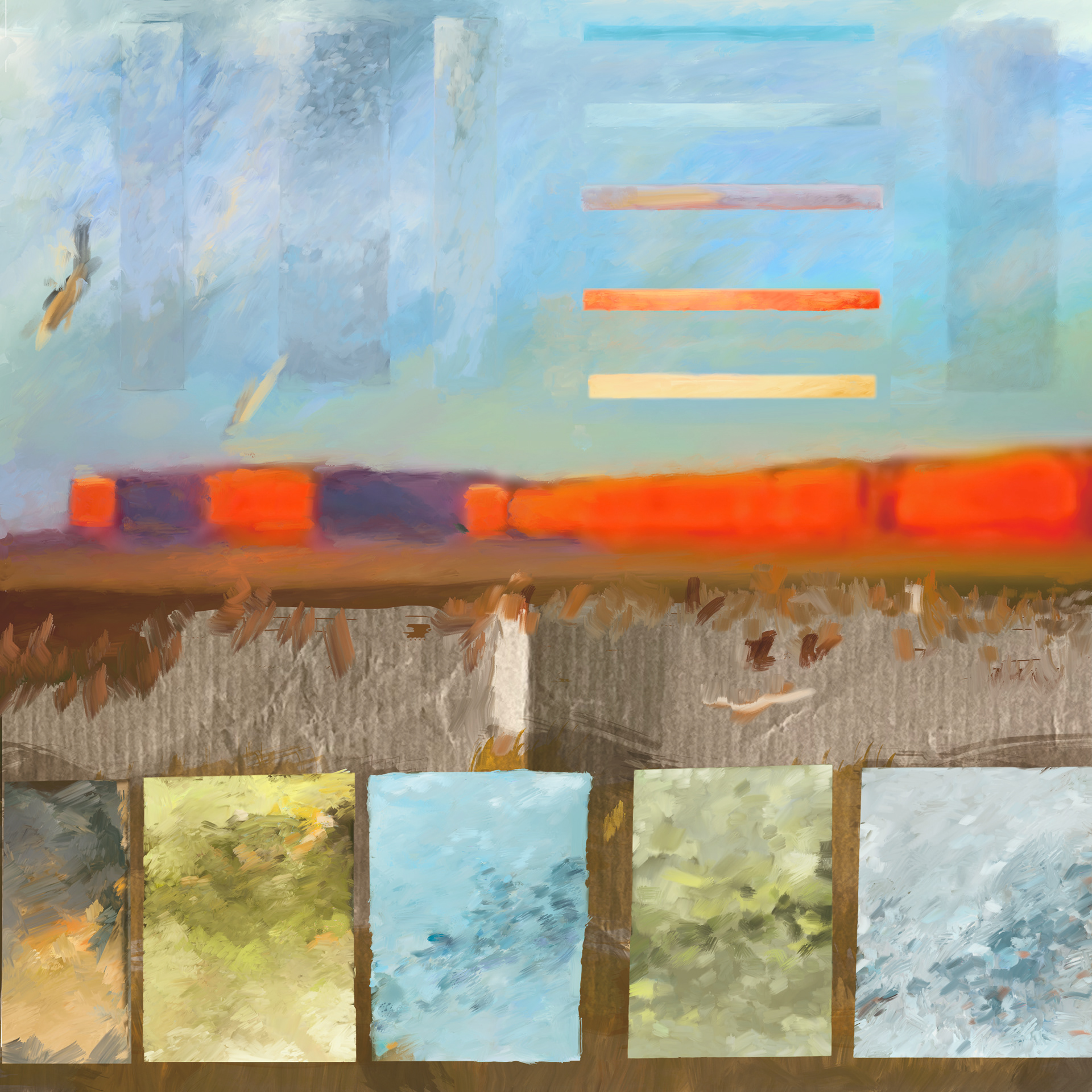
unknown legend # 8 easy rider
A step further leads here: guided by the earlier sources and inspirations, and deepened by the lasting memory of Easy Rider, Peter Fonda’s road movie from 1969. From that point, it both draws near and drifts away, unfolding into its own direction.
unknown legend / intermezzo
Case